01
Custom Avionics PCB
Fully SRAD flight computer handling state estimation, dual-deploy recovery logic, and pyro channel control, designed, routed, and assembled in-house.
EST. 2018
Duke AERO is a student engineering team at Duke University, designing and building high-powered rockets for the annual Intercollegiate Rocket Engineering Competition.



















ELECTRONICS & SRAD
We develop Student Researched and Developed (SRAD) flight computers, custom power management PCBs, and real-time telemetry systems.
Fully SRAD flight computer handling state estimation, dual-deploy recovery logic, and pyro channel control, designed, routed, and assembled in-house.
Dedicated power management board with protected battery buses, live current monitoring, and clean rails for every subsystem in the stack.
Fully custom SDR solution streaming live video from the airframe to the ground station throughout the flight, with no off-the-shelf transmitters.
PAYLOAD
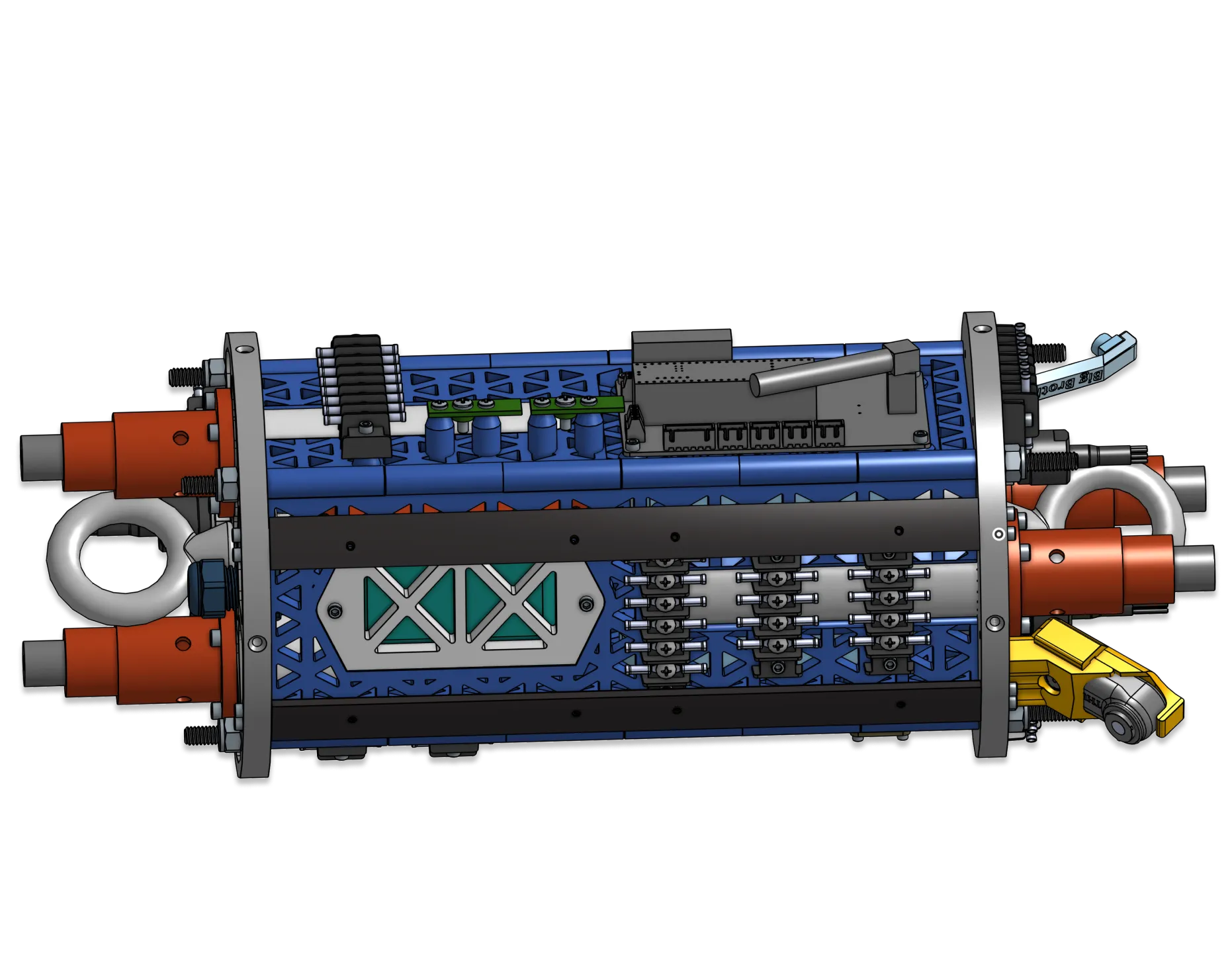
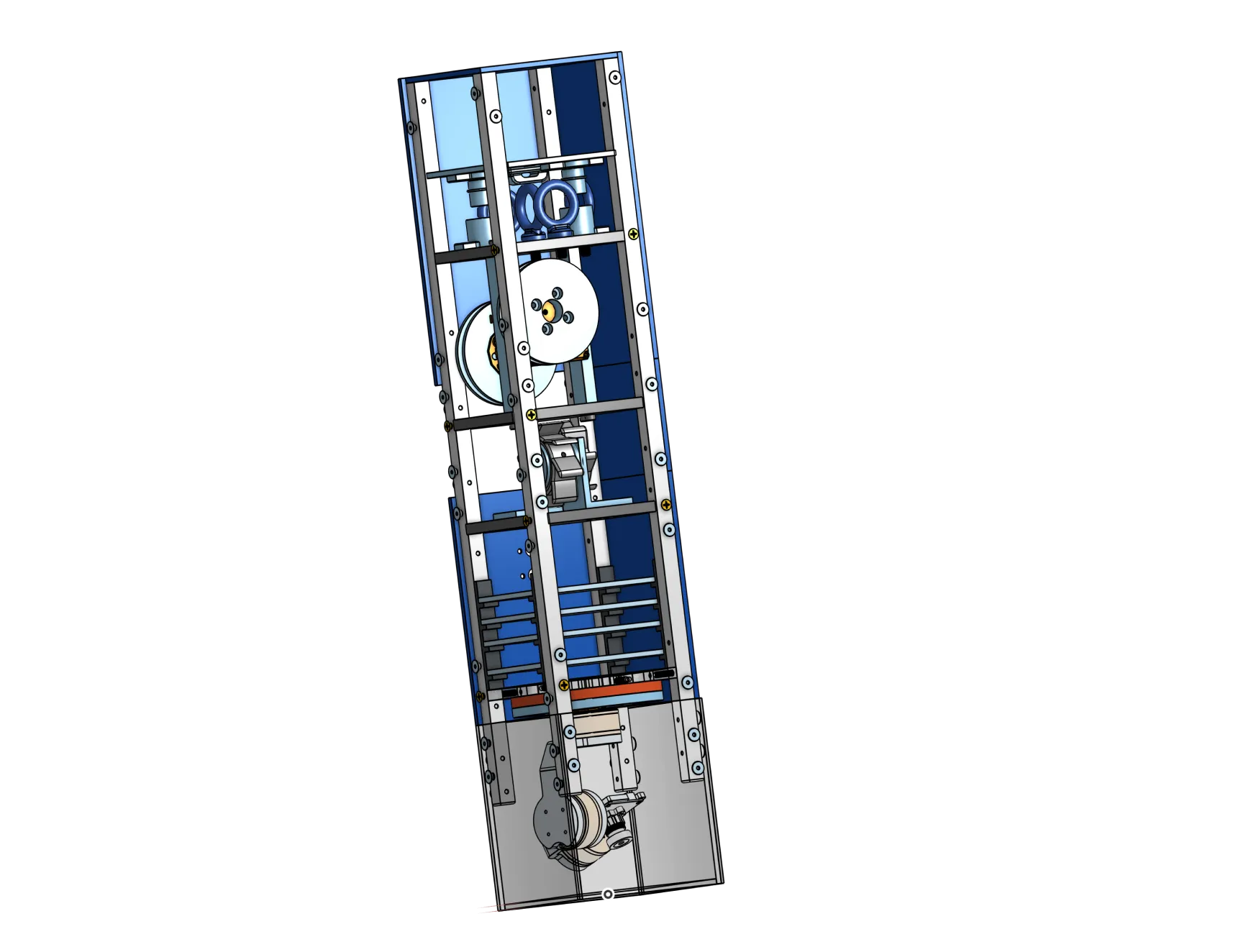
Ejected from the rocket at apogee and recovered independently. Kratos features a guided parachute recovery system, an in-flight power recycling module, a stabilized 3-axis gimbal camera, and a fully custom avionics stack, all student-designed and built.
PROPULSION R&D
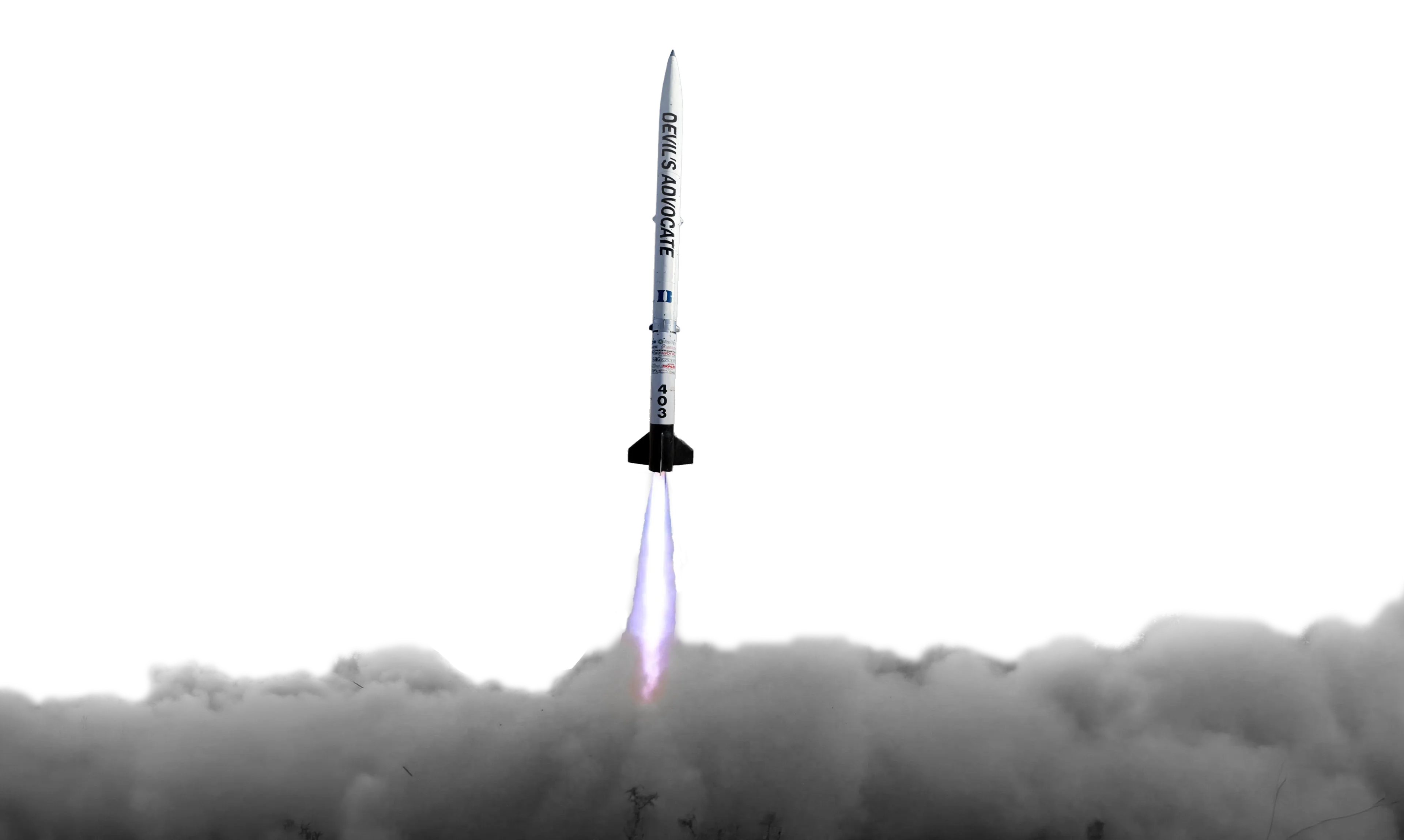
Our solid propulsion division develops custom APCP formulations and student-built BATES grain motors, validated by custom data acquisition and in-flight pressure sensing hardware. Pushing the boundaries for our next generation of vehicles, the liquids division is actively developing a Kerosene and Nitrous Oxide motor managed by an in-house control board.
PROPULSION R&D
Our solid propulsion division develops custom APCP formulations and student-built BATES grain motors, validated by custom data acquisition and in-flight pressure sensing hardware. Pushing the boundaries for our next generation of vehicles, the liquids division is actively developing a Kerosene and Nitrous Oxide motor managed by an in-house control board.
GROUND SYSTEMS
Our newest subteam builds everything that stays on the ground: the stand the vehicle launches from, the tracking mount that follows it downrange, and the telemetry, video, and comms tying the pad to recovery.
RECOVERY
Dual-deploy recovery with student-sewn cruciform parachutes and magnetometer-guided descent, steering every section of the rocket back toward the pad.
2
deployment events per flight
3
SRAD parachutes on Perseus
100%
of components recovered at IREC 2026
AERODYNAMIC SIMULATIONS
Every airframe flies thousands of times in software before it touches the rail. CFD shapes our fins and canards, FEA proves the structures, and a custom 6-DoF simulator generates the flight plans our airbrake controller chases to the foot.
STRUCTURES & COMPOSITES
Every structural part of the vehicle is laid up, wound, machined, and finished by students. Carbon where the airframe needs stiffness, fiberglass where the radios need to see through it, and a surface finish built to hold together at supersonic speed.
Von Kármán profile, the minimum-drag shape, hand-laid in carbon.
Filament-wound carbon, layup tuned station by station for minimum mass.
Pre-preg fiberglass: RF-transparent, so telemetry and video get out clean.
Overmolded carbon control surfaces, a process we developed in-house.
Composite-plate fins, aligned and bonded from edge to edge to ensure maximum strength.
LATEST VEHICLE
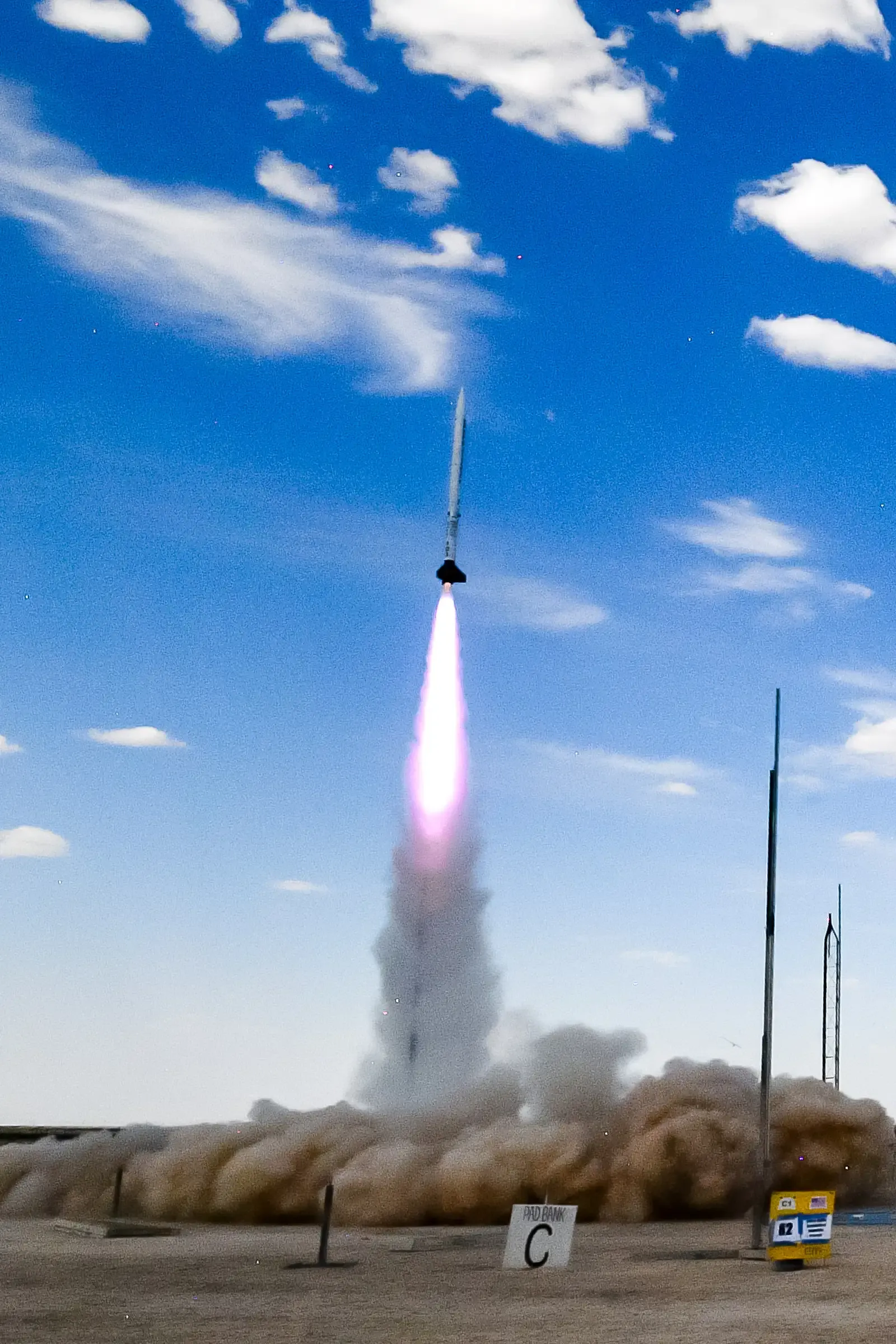
11.5 ft tall·126 lb·Mach 1.7·37,700 N·s
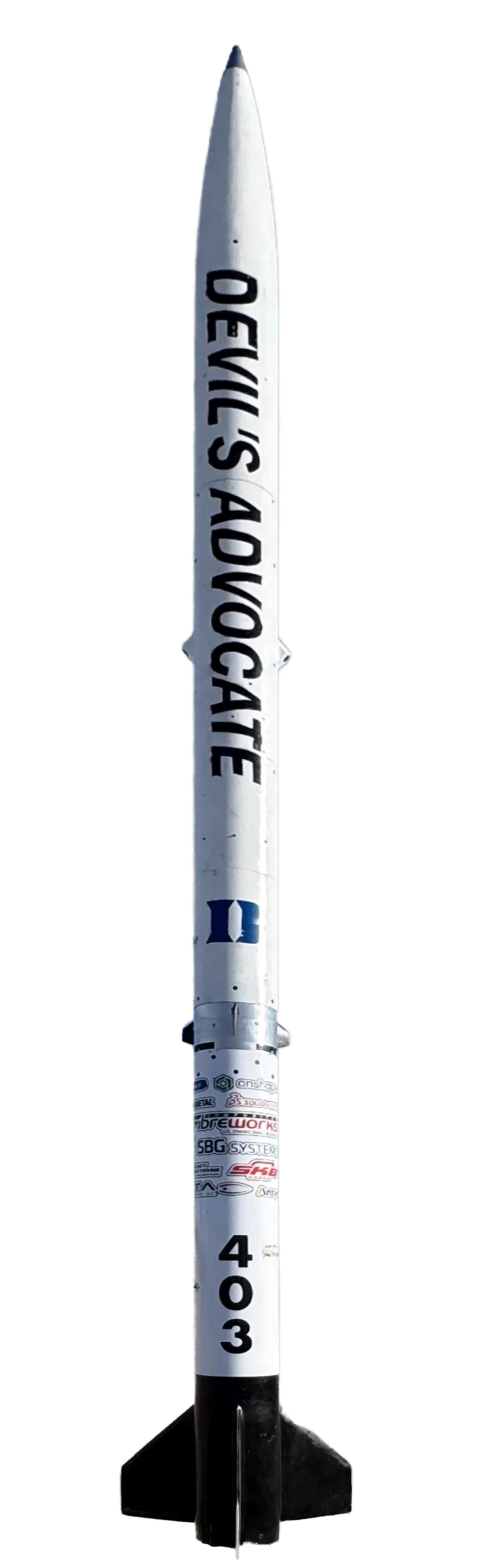
Our largest and most advanced rocket yet, third place in the 30,000-foot SRAD propulsion category at IREC 2026.
Read the flight reportTHE TEAM
Every system on the rocket is owned end-to-end by a student subteam: design, analysis, manufacturing, and flight.
SRAD flight computers, power boards, and a fully custom SDR video downlink, every PCB ours.
Student-mixed APCP motors up to O-class: 37,700 Ns of impulse and a Duke-blue flame.
Student-sewn cruciform parachutes, CO2 separation, and guided descent that bring every section home.
Prepreg carbon airframes, forged-carbon control surfaces, and in-house machined couplers.
CFD and 6-DoF flight simulation shaping fins, canards, and airbrake control laws.
Deployable CubeSats with gimbal cameras, live video, and autonomous landing-spot detection.
Tracking, telemetry, rocket stands; equipment that helps the rocket move from ground to air, and back.
The next generation: a student liquid engine program, from injector design to the test stand.
GET INVOLVED
No experience required, just curiosity. Every subteam takes new members and teaches you the rest. Drop into a meeting and start building.
START HERE
General Body Meeting